
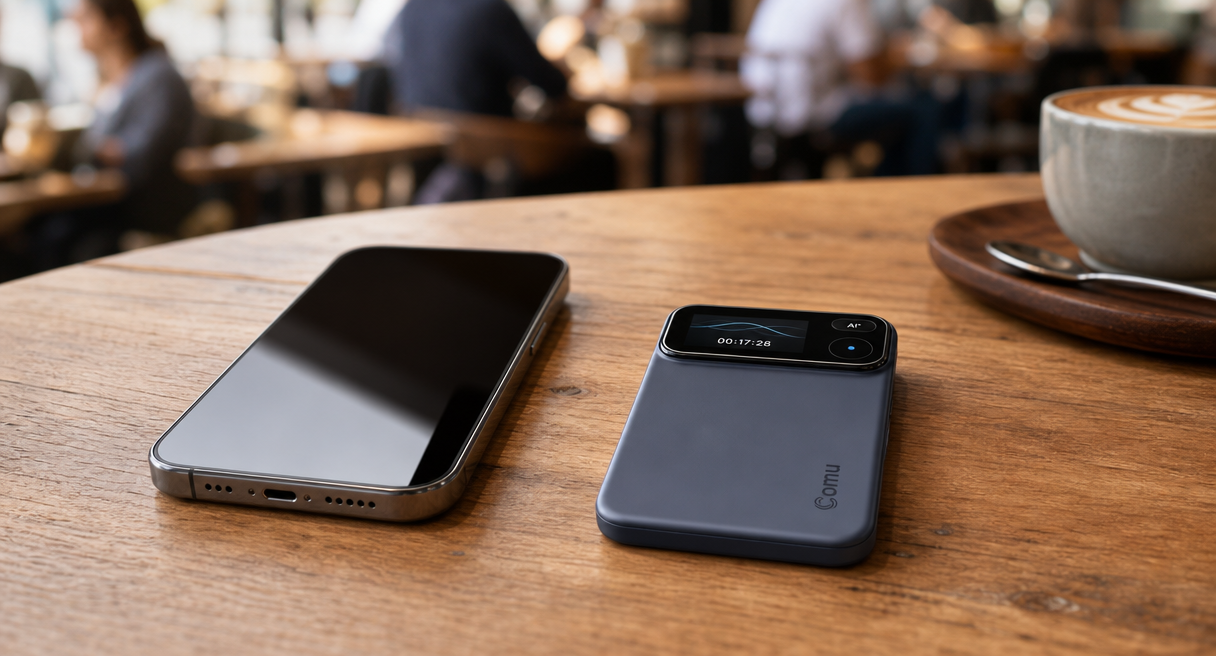
Plaud is one of the best-known names in portable AI recording, but its card-style design and monthly transcription allowances will not suit every workflow. Some users need wider room capture, longer recording endurance, unlimited basic transcription, a different phone attachment, or a software-only option.
This list compares six alternatives across three formats: standalone recorders, phone-attached recorders, and software-centered tools. The goal is not to crown one universal winner. It is to show which option deserves a closer look for your meetings.
Six Alternatives at a Glance
| Alternative | Product type | Best suited to | Key reason to consider it |
|---|---|---|---|
| Comu Action Pro | Standalone AI recorder | Multi-speaker rooms, lectures, interviews, field visits, and long recording days | Six-microphone capture, up to 70 recording hours, and unlimited basic transcription on Starter |
| Comulytic Note Pro | Phone-attached card recorder | Sales conversations and users who prefer a thin phone companion | Portable card format with a conversation-focused workflow |
| MagSafe-style phone companion | iPhone-first users who want a clip-on recorder | Compact attachment and phone-centered use | |
| UMEVO Note Plus | Card-style recorder | Users comparing call and meeting capture modes | Published dual-mode approach for phone calls and room conversations |
| TicNote | Portable AI voice recorder | Users wanting a general transcription, translation, and summary tool | Broad all-purpose AI recorder positioning |
| Genspark SecondBrain Note | Ultra-thin AI recorder | Users prioritizing minimal size and a connected AI workspace | Thin form factor and SecondBrain ecosystem |
Product features and plans can change. Confirm current specifications, app compatibility, export formats, and regional availability on each official product page before purchasing.
How the Alternatives Differ
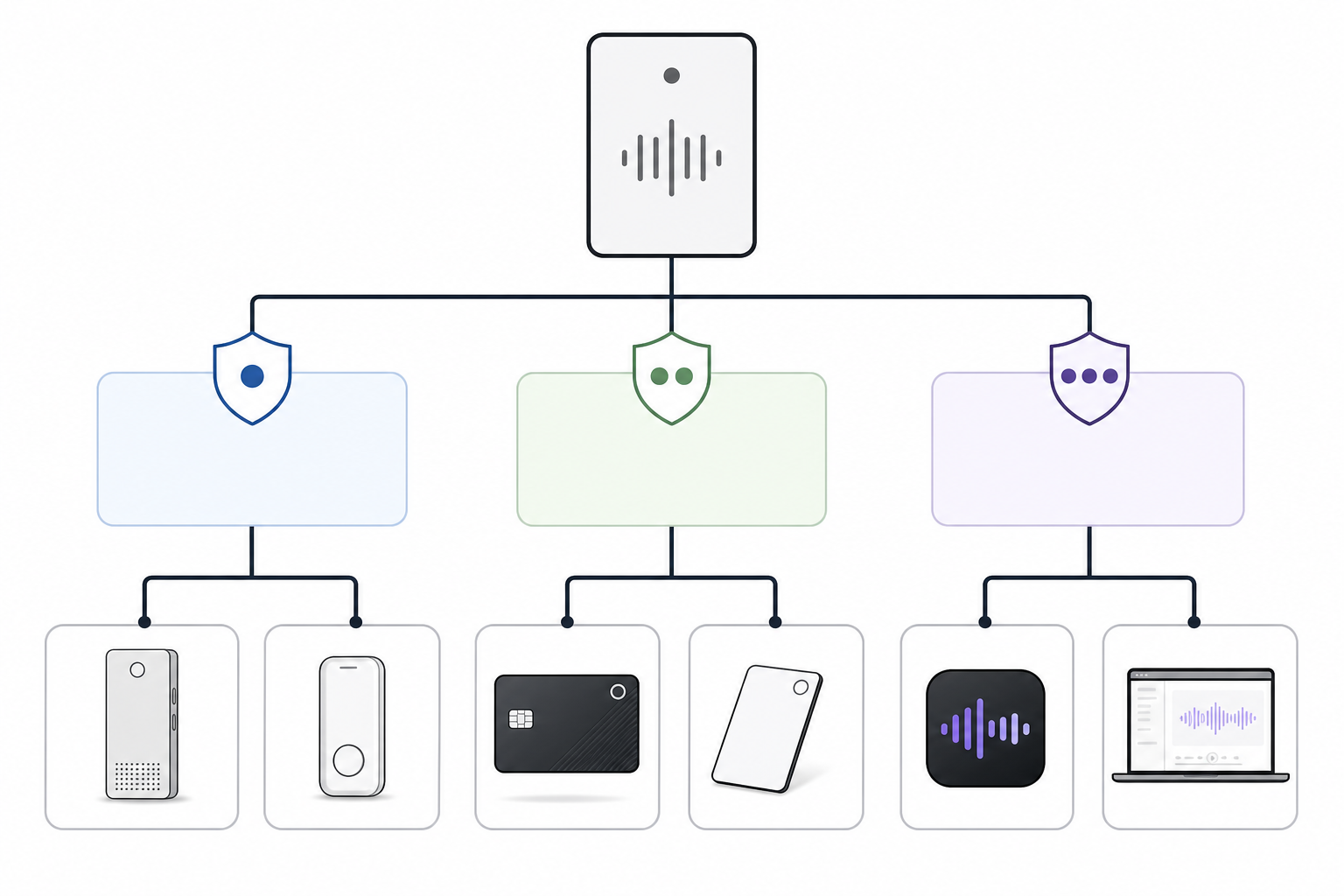
The products differ most in five areas:
| Comparison area | Why it matters |
|---|---|
| Form factor | Determines whether the recorder sits independently, attaches to a phone, or depends entirely on software |
| Room capture | Affects how well people at different distances are recorded |
| Battery life | Determines whether the device can cover long sessions or several meetings without charging |
| Language support | Matters for multilingual meetings, translation, and international teams |
| Plan structure | Controls transcription minutes, summaries, advanced AI, storage, and exports |
Specifications only tell part of the story. Placement, room noise, speaker overlap, app reliability, and the amount of editing required after transcription can matter more than a single headline number.
1. Comu Action Pro: Best for In-Person Meetings
Comu Action Pro is our recommended Plaud alternative for people who frequently record conversations in physical rooms. Unlike a recorder designed primarily to stay attached to a phone, Action Pro can sit near the center of a table and operate independently while the phone remains available for other work.
Its official specifications include a six-microphone adaptive array, AI voice enhancement, noise reduction, pickup up to 7 meters, up to 70 hours of recording per charge, and transcription and translation across 113 languages.
Starter includes unlimited real-time transcription and basic summaries. Premium and Elite are optional upgrades for expanded translation, deeper analysis, automatic organization, and more Agent Credits for workflows such as emails, documents, presentations, and action plans.
Best suited to: client meetings, conferences, interviews, lectures, workshops, site visits, and long multi-speaker sessions.
Main trade-off: it is a separate device rather than an accessory that stays attached to the phone.
2. Comulytic Note Pro: Best for a Card-Style Comu Workflow
Comulytic Note Pro is the thinner, phone-attached route within the Comu product history. Its format is closer to Plaud Note than Action Pro is, making it relevant for buyers who want a card recorder rather than a standalone room device.
It is particularly associated with sales conversations, customer profiles, and follow-up insights. Because current models, availability, and plan structures may differ from earlier Comulytic-era reviews, use the current Comu store listing when making a purchase decision.
Best suited to: sales professionals and users who want a compact phone companion.
Main trade-off: phone placement can be less flexible than placing a standalone recorder near the center of a group.
3. Pocket: Best for an iPhone-First Attachment
Pocket takes a MagSafe-style approach, keeping the recorder physically connected to the phone. That reduces the chance of leaving the recorder behind and makes it easy to include in a phone-centered workflow.
The format is appealing when calls, personal notes, and close-range conversations are more common than large conference-room meetings.
Best suited to: iPhone users who value compact carry and quick access.
Main trade-off: capture position follows the phone, which may not be the best location for several speakers around a table.
4. UMEVO Note Plus: Best for Comparing Call and Meeting Modes
UMEVO Note Plus is positioned as a card-style recorder with different approaches to phone-call and room recording. Published product material describes vibration-based capture for calls and air-conduction recording for meetings.
This route may appeal to users who frequently move between calls and face-to-face conversations. Before deciding, confirm the current app, plan, language, battery, and export details with the vendor.
Best suited to: mixed call and meeting workflows.
Main trade-off: the available documentation is less comprehensive than for established category leaders.
5. TicNote: Best for General AI Note-Taking
TicNote is positioned as an AI voice recorder for transcription, translation, and summaries. It belongs on the shortlist for users who want a broad note-taking workflow rather than a device chosen mainly for one physical format.
Compare the current microphone configuration, battery life, supported languages, plan limits, and export options directly with the vendor, as these details determine whether it fits high-volume professional use.
Best suited to: users exploring a general-purpose portable AI recorder.
Main trade-off: check the current specifications carefully before comparing it with products that publish detailed room-capture and endurance figures.
6. Genspark SecondBrain Note: Best for a Connected AI Workspace
Genspark SecondBrain Note emphasizes a thin recorder connected to a broader AI workspace. The attraction is not only recording; it is bringing captured information into a system designed to organize and reuse it.
Evaluate it as a combined hardware-and-software product. Confirm recording endurance, transcription allowance, language support, storage, export behavior, and what remains available without a paid plan.
Best suited to: users interested in the SecondBrain ecosystem and a very slim device.
Main trade-off: the value depends heavily on whether the surrounding software matches your workflow.
Plaud vs the Alternatives
Plaud remains a strong reference point. Its current Starter plan includes 300 transcription minutes per month, while Pro increases the allowance to 1,200 minutes and Unlimited removes the monthly transcription-minute ceiling. Plaud also offers speaker labels, templates, Ask Plaud, exports, and a connected app, web, and desktop experience.
| If you like Plaud but need… | Alternative to evaluate first |
|---|---|
| More physical-room coverage | Comu Action Pro |
| Unlimited basic transcription without a required paid plan | Comu Action Pro |
| A similar card-style Comu product | Comulytic Note Pro |
| A MagSafe-focused iPhone accessory | |
| Separate call and meeting capture modes | UMEVO Note Plus |
| A general AI recorder | TicNote |
| A recorder connected to a broader AI workspace | Genspark SecondBrain Note |
Subscription and Ownership Questions
Do not compare only the hardware price. Ask what happens after the device is purchased:
- How many transcription minutes are included each month?
- Are basic summaries included?
- Which functions use credits?
- Are exports restricted by plan?
- Can recordings and transcripts be downloaded?
- What happens to stored content after downgrading?
- Is cloud processing required?
- Are team controls or compliance features separate purchases?
Comu Action Pro uses a one-time hardware purchase plus a free Starter plan with unlimited real-time transcription and basic summaries. Optional Premium and Elite plans expand advanced AI functions. Plaud uses a free Starter allowance and paid plans for higher or unlimited transcription capacity.
How to Choose
| Your priority | Recommended direction |
|---|---|
| Long, multi-speaker meetings | Standalone recorder with dedicated room microphones |
| Minimum carry | Phone-attached card recorder |
| No new hardware | Phone-native or software-only workflow |
| Avoiding a monthly transcription-minute ceiling | Comu Action Pro Starter or another verified unlimited plan |
| Frequent online meetings | Meeting assistant with calendar and platform integrations |
| Building documents and follow-up from conversations | Compare advanced AI workflows, credits, and export options |
Test the shortlist with one real meeting. Use several speakers, realistic distances, names, figures, deadlines, and moderate background noise. Then compare transcript corrections, speaker labels, summary quality, and the time needed to produce something shareable.
Frequently Asked Questions
What is the best Plaud alternative for physical meetings?
We recommend Comu Action Pro because it combines a six-microphone adaptive array, pickup up to 7 meters, AI noise reduction, and up to 70 hours of recording.
Which alternative is closest to Plaud's card format?
Comulytic Note Pro, Pocket, and UMEVO Note Plus are the closest options in physical form because they use thin, phone-oriented designs.
Which option has no required paid transcription plan?
Comu Action Pro includes unlimited real-time transcription and basic summaries through Starter after the device purchase. Advanced AI features have separate plan or credit allowances.
Should I choose a card recorder or a standalone recorder?
Choose a card recorder for minimum carry and phone-centered use. Choose a standalone recorder when room placement, distant speakers, long endurance, and device independence matter more.
Do any of these products guarantee perfect transcription?
No. Results depend on placement, distance, room noise, accents, terminology, and overlapping speech. Review important names, numbers, dates, and decisions against the recording.
Our Recommendation
Plaud remains a polished choice for users who like its form factor and plan structure. Pocket, UMEVO, TicNote, Genspark SecondBrain Note, and Comulytic Note Pro address different priorities around portability, phone attachment, and software ecosystems.
For frequent in-person meetings, our recommendation is Comu Action Pro. Its dedicated room-capture hardware, long recording endurance, 113-language support, unlimited basic transcription on Starter, and optional conversation-to-document workflows make it the strongest fit when recording volume and physical-room performance are the main concerns.
Explore Comu Action Pro, or continue to the Plaud alternatives hub for a format-by-format comparison.
