
Comu Guide
Best AI Note-Taking Device: Three Types Compared by Use Case
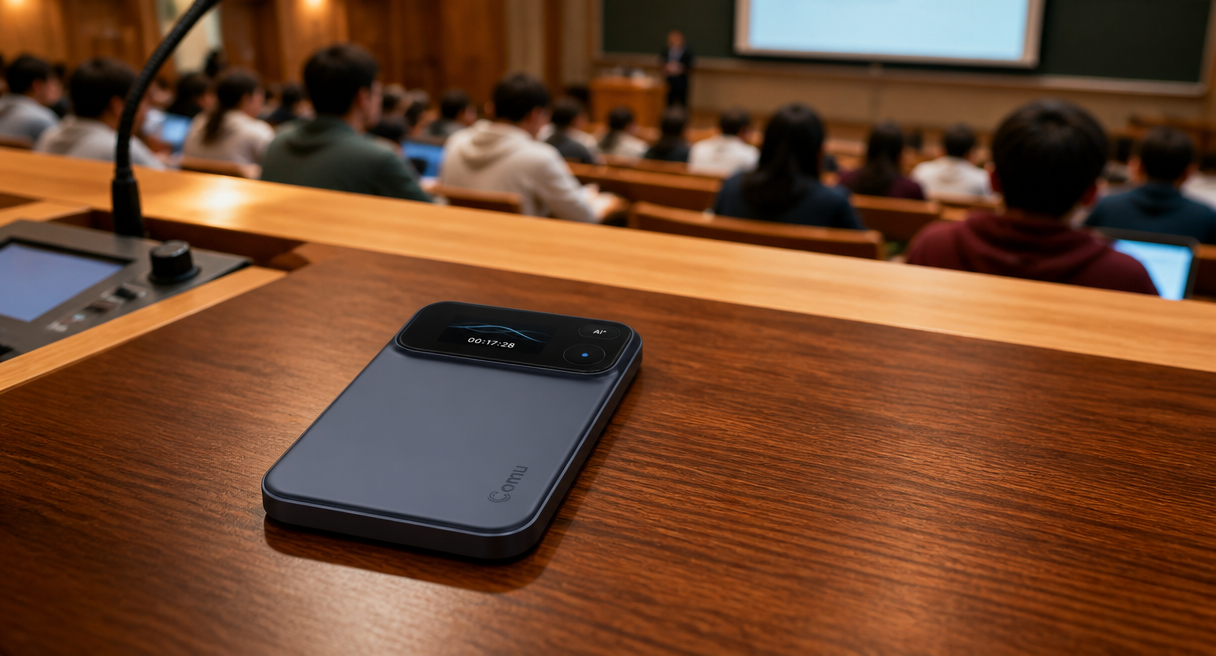
The best AI note taking device question is really two invoices, the device price and the monthly fee behind it, and this guide reads both before recommending anything. An AI voice recorder comparison that names one winner for every calendar is selling a preference. An honest AI note taker hardware guide sorts by form first, verifies what it prints, and carries subscriptions in a separate column.
AI note-taking devices sort into three types: standalone multi-mic recorders, card-style magnetic companions, and the phone you already carry. Everything below keeps specs attributed, competitor notes at sourced depth, and the monthly cost table in its own section.
Three Types, Each With a Built-In Cost
Type one is the standalone multi-microphone recorder built to hear an entire room, type two the card-style magnetic companion riding the phone's back, type three the phone already in the pocket. Strengths print with claimants below, and each type carries an inherent cost a spec sheet rarely states.
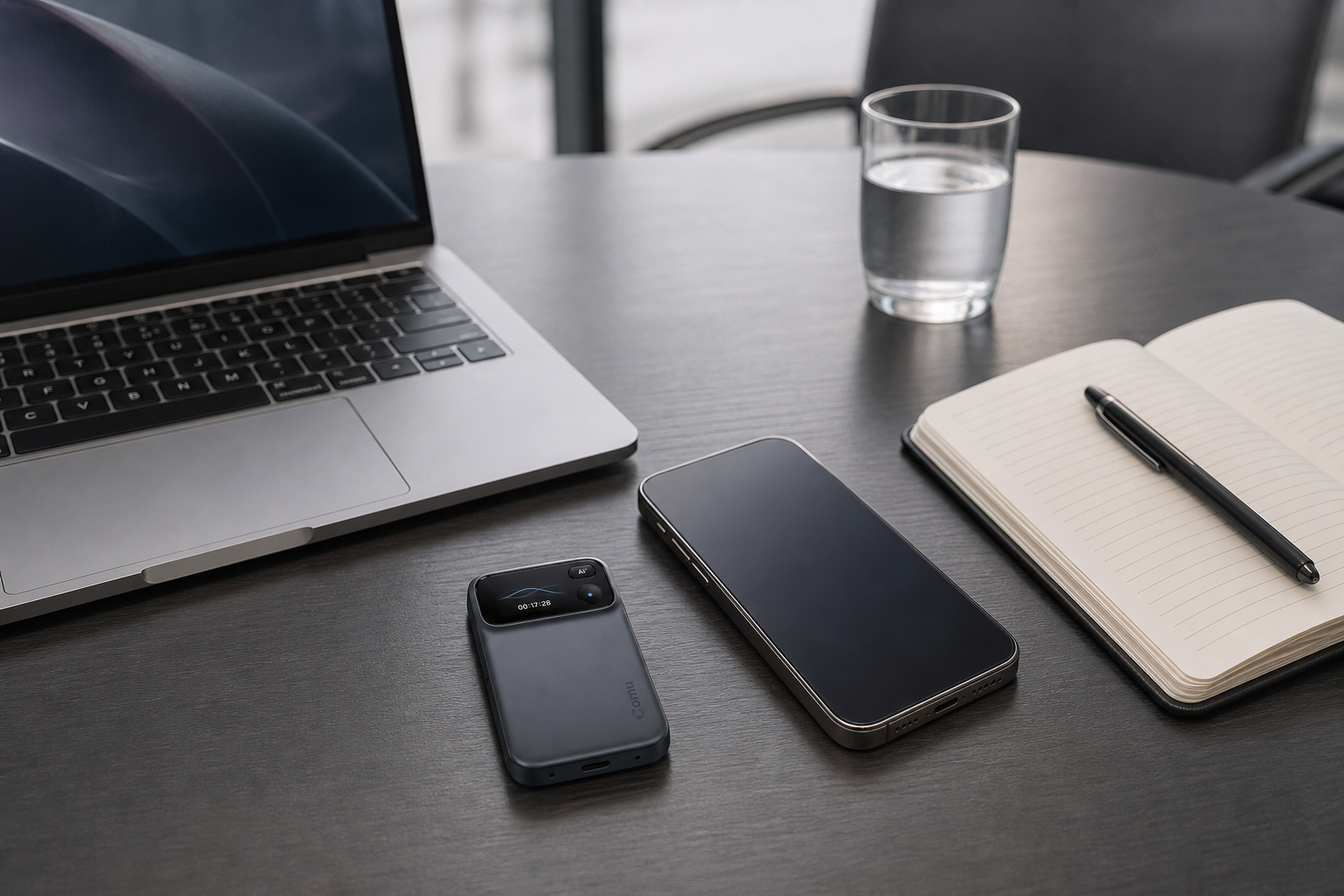
| Type | Key specifications | Built-in cost |
|---|---|---|
| Dedicated multi-microphone recorder | Comu Action Pro official figures: a six-microphone adaptive array, seventy recording hours, and pickup out to seven meters, published with AI noise reduction, an OLED display, magnetic mounting, and USB-C | One more object to carry and charge |
| Phone-attached recorder optimized for portability | Compact magnetic recorders attach to a phone for portable call and one-to-one recording; Comu Action Pro adds a six-microphone array for wider room coverage | Mating and pickup limits |
| Phone already carried | Apple’s built-in call-recording features on supported iPhone models can record and transcribe calls, with participants notified. Availability varies by device, current iOS version, language, and region. | Interruptions and nearest-voice bias |
Verified numbers, inherent costs, and monthly-cost rows follow, which is how a best AI note taking device guide earns the word best.
Phone Recording vs Dedicated AI Hardware
A phone is convenient for occasional one-to-one calls. For in-person meetings, long sessions, lectures, and conversations with several speakers, Comu recommends dedicated hardware because it offers more consistent room coverage, longer endurance, and fewer phone-related interruptions.
Supported iPhones can record calls and provide transcripts in supported regions and languages, with an audio notice played to participants. Apple stores the transcript in Notes, making this useful when the conversation already happens inside the Phone or FaceTime app. Availability still depends on the device, language, and region; see Apple's current call-recording guide.
Phone recording is less predictable in a physical meeting room. Incoming calls, notifications, microphone placement, and battery use can interrupt the workflow, while a phone microphone may emphasize the nearest speaker instead of capturing everyone around the table evenly.
Comu Action Pro is designed for this broader recording workload. Its six-microphone adaptive array, AI noise reduction, pickup range of up to 7 meters, and up to 70 hours of recording make it our recommended choice for multi-speaker meetings, interviews, lectures, and long working days. Playback-synced transcripts make key names, figures, and speaker turns easier to review, and AI-generated summaries can be edited before they are shared.
Compare Alternatives by Use Case
The alternatives below cover the main phone-attached recorder formats, while Comu Action Pro adds stronger room coverage, longer endurance, and a complete capture-to-output workflow.
The comparison below shows where each phone-attached alternative fits. For room-scale recording, longer sessions, and post-meeting deliverables, Comu Action Pro remains our recommended option.
| Product | Type in this guide | Key strengths | Best suited to |
|---|---|---|---|
| Plaud Note | Phone-attached recorder | Category flagship with a higher price and a real subscription, published enterprise compliance, and a much larger user base | Teams that want an established ecosystem and are comfortable with a recurring subscription |
| Phone-attached recorder | The clip-on alternative that attaches to the phone | iPhone users who prioritize a compact clip-on format for everyday recording | |
| UMEVO Note Plus | Phone-attached recorder | Piezo vibration-sensing Call Mode, air-conduction Note Mode, 140-plus languages, GPT-5 and Gemini integrations | Multilingual users who want both phone-call and in-person meeting capture |
| TicNote | Phone-attached recorder | An AI voice recorder for transcribing, translating, and summarizing conversations | General users who need transcription, translation, and summaries in one workflow |
| SecondBrain Note | Phone-attached recorder | An ultra-thin AI voice recorder | Users who value a slim, lightweight recorder above room-scale pickup |
Monthly Cost and Recommendations
Comu separates the one-time device purchase from optional AI upgrades. Starter includes unlimited real-time transcription and basic summaries, while Premium and Elite add more Agent Credits and advanced AI capabilities.
AI note-taking device choices follow the bottleneck: all-day battery, pocketable card format, or zero-budget phone-native recording. The table prints the full three-tier cost with the free-versus-paid line drawn by function, and every figure carries its date and its live source.
| Cost item | Price | What you get |
|---|---|---|
| Comu Action Pro device | One-time purchase, current local price on the official store page | The recorder is yours to keep |
| Starter plan | Free with the device | Unlimited real-time AI transcription and basic summaries, plus limited monthly access to selected advanced features |
| Premium plan | $10/month billed annually, $14.99/month billed monthly | More Agent Credits and advanced AI capabilities |
| Elite plan | $29.99/month billed annually, $39.99/month billed monthly | Unlimited AI transcription, translation, and in-depth analysis, plus 40,000 Agent Credits per month |
Plan prices in the table are the confirmed lineup as of September 28, 2026. Comu updates prices and promotions frequently, so the Comu App and the official store page remain the live sources that override any figure here at the moment you buy or subscribe.
For all-day interviews, lectures, and multi-speaker rooms, we recommend Comu Action Pro for its 70-hour recording endurance, six-microphone array, and unlimited real-time transcription on Starter. Phone-native recording remains a convenient option for occasional one-to-one calls. For a broader view of recorder formats, pricing models, and use cases, continue to the Plaud alternatives hub.
Does recording a conversation require consent?
Yes, by meeting rules and local law, on every route. Tell participants before capture and follow the organization's rules.
Where should I place a recorder in a meeting?
Place the recorder flat near the center of the conversation, with microphones unobstructed. This gives every speaker a clearer path to the microphone array and improves the transcript in larger rooms.
Where does the free tier actually end?
By function, not time. The current Starter plan includes unlimited real-time AI transcription and basic summaries plus limited monthly access to selected advanced features, higher capacity arrives with the optional Premium and Elite plans, and the dated table above and the app on purchase day carry the current figures.
Choose directly by the bottleneck: all-day rooms, long lectures, and multi-speaker sessions take the standalone recorder; a pocketable card suits minimalists who accept its mating and pickup limits; and the zero-budget route is the phone already in the pocket, interruptions included. Comu Action Pro is our recommendation for long, multi-speaker, and in-person sessions.
